ISO 14001 2026版

新要求和調整概述

全球公認的環境管理標準ISO 14001目前正在修訂中。根據… ISO更新後的版本預計將於…發布。 2026年4月國際認證論壇(IAF)已設定了36個月的過渡期——這意味著現有的ISO 14001認證最晚必須在 2029 年 4 月之前轉換為新版本。

在上次全面修訂十多年後,國際標準化組織(ISO)正在積極應對不斷變化的情況。日益加劇的氣候變遷和全球向再生能源的轉型,要求進一步完善標準內容,以使環境管理體系適應未來發展,並更加緊密地與可持續發展相契合。

ISO 14001 目前的修訂進度如何?

修訂工作已順利:繼2025年2月發布徵求意見稿後,國際標準草案(ISO/DIS)於同年6月發布。國際標準最終草案(ISO/FDIS)自 2026 年 1 月 5 日起可用。

本頁將介紹 ISO 14001 修訂版包含哪些變更,這些變更對現有環境管理系統意味著什麼,以及如何為此變更做好具體準備。 ISO 14001:2026 預計 2026 年 4 月發售。


ISO 14001 修訂版有哪些變更?

ISO 14001 的修訂並未帶來根本性的改變,而主要是對管理系統中現有要求的澄清和規範,尤其是在資料性附錄 A 中。當前環境發展趨勢,如氣候變遷、溫室氣體排放、資源短缺等,循環經濟永續發展目標和歐洲綠色協議得到了更多重視。

2023年4月,ISO發布了ISO 14001的全球用戶調查結果。該調查旨在從使用者角度評估修訂現行ISO 14001:2015標準的必要性。儘管許多參與者希望在應用方面獲得更多指導和更清晰的說明,但大多數人反對對該標準進行根本性修訂。

儘管如此,負責的技術委員會 ISO/TC 207/SC 1 決定啟動 ISO 14001 的修訂工作——甚至在調查結果正式公佈之前。不過,此次修訂主要涉及資料性附錄 A,這意味著環境標準的可持續發展將較為謹慎。
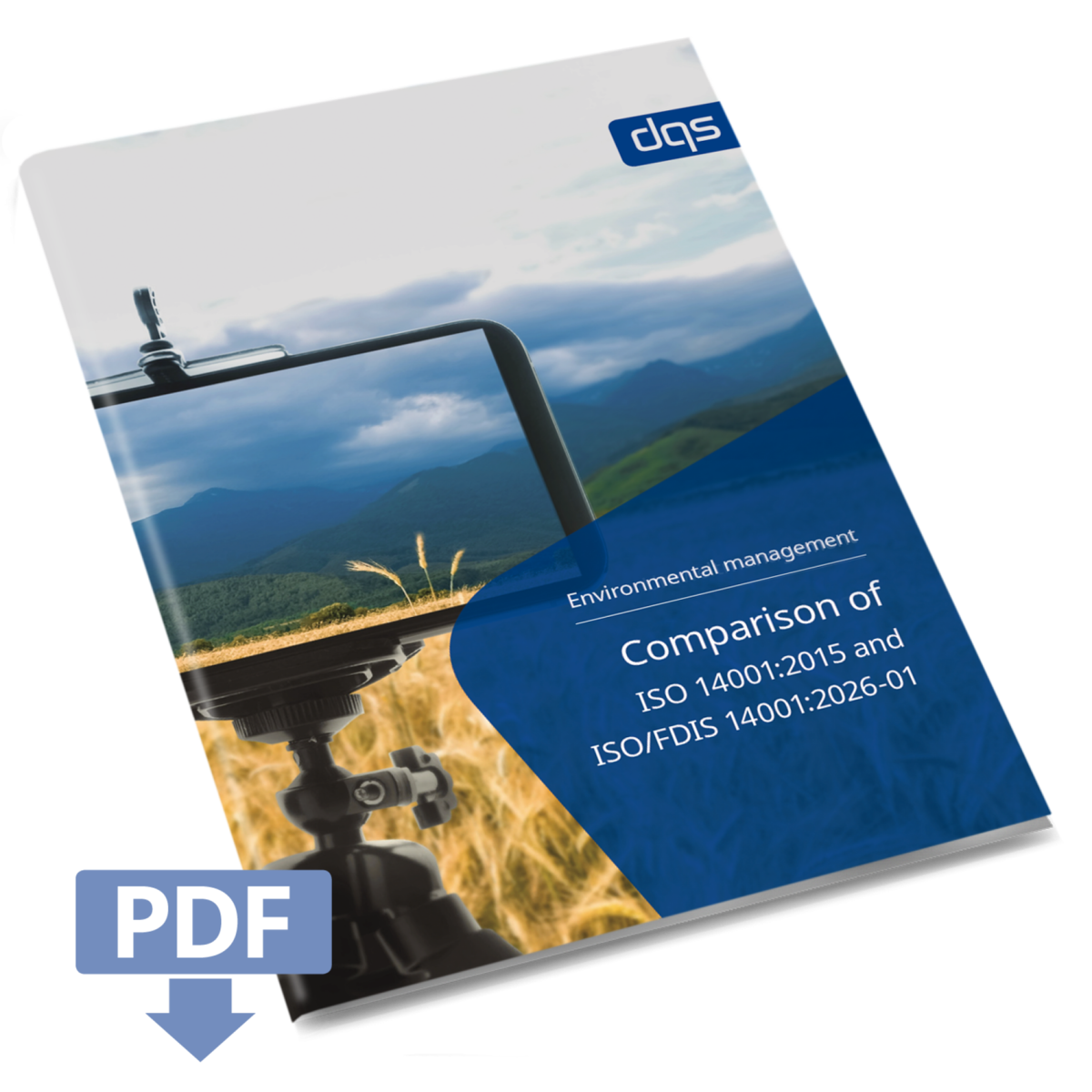
Title image of the English whitepaper on environmental management: Comparison ISO 14001:2015 vs ISO/
Loading...
免費白皮書

ISO 14001:2015 與 ISO/FDIS 14001:2026 的比較

我們的免費比較提供結構化的比較現有和新的標準要求並清楚地說明了 2015 年和 2026 年之間的差異。

ISO委員會指出,近年來環境領域發生的諸多變化,其中一些變化意義重大,是此次修訂的主要原因:

  • 氣候變遷日益加劇
  • 溫室氣體排放的重要性日益凸顯
  • 自然資源匱乏
  • 增加再生能源的使用
  • 在功能性環境中的要求循環經濟

此外,聯合國永續發展目標(SDGs)和歐洲綠色協議未來將更緊密地融入環境標準架構中。而目前的ISO 14001:2015標準則完全專注於…對生命週期的考慮在可持續發展的大背景下,產品和服務的內容預計未來將會擴展。


ISO 14001 修訂:您現在需要做什麼?

如果您已經引入了環境管理體系根據 ISO 14001 標準,我們建議使用 FDIS 進行務實的現實檢驗,審查相關主題,並從中確定兩到三個優先方面,並跟進這些方面,直到標準發布,同時安排內部審核和管理評審作為進度監控的固定錨點。

ISO 14001修訂:規劃準備步驟

經驗表明,內部流程無法在短時間內進行調整,因此建議儘早開始過渡活動,以便可靠地管理過渡。

  • 明確職責
  • 了解標準的變更
  • 執行差距分析
  • 規劃並實施措施
  • 訓練員工
  • 檢查管理體系的有效性
  • 確定認證審核日期
The revision of ISO 9001 is symbolized by a glass whiteboard with colourful notes.
Loading...
免費影印版

ISO 14001過渡計劃(PDF)

改變往往會帶來新的問題。為了盡可能為您提供指導,我們匯總了所有與過渡計劃相關的必要資訊。請使用我們簡明扼要的指南。 PDF摘要快速概覽。

為什麼 DQS 是您取得 ISO 14001 修訂資訊的第一選擇?

成立於1985年,是第一個認證機構管理系統在德國, DQS DQS擁有數十年的經驗,並與標準化機構、專業界和審核機構建立了緊密的聯繫。因此,它不僅能夠以技術上嚴謹的方式對ISO 14001的修訂進行分類,而且還致力於成為現有客戶和新客戶在實施和認證新標準方面的支援合作夥伴。 DQS以務實和注重實施的方式為企業提供支持,尤其是在以下方面:認證週期以及過渡期和諸如轉移審核或矩陣認證等主題。


專家意見:為什麼修訂 ISO 14001 標準很重要?

ISO 14001 的修訂意義重大,因為它系統性地將氣候變遷、溫室氣體排放、資源短缺和循環經濟等當前環境發展趨勢納入環境管理,從而加強了組織的戰略永續性。

專家們對 ISO 14001 修訂版有何評價?

專家認為即將進行的修訂是標準的持續發展,其核心內容包括:永續發展目標與 ISO 14001或更堅定地支持歐洲綠色協議,並考慮到人們對透明度、風險和生命週期評估日益增長的期望。

他們認為,這與其說是根本性的調整,不如說是對現有環境要求的具體內容和策略分類進行更清晰的界定。專家強調,各組織應儘早分析並積極應對修訂,以便抓住機會、更好地管控風險並有效推進環境管理,而不僅僅是進行形式上的調整。


Loading...

Embedding climate in context

Tyrone Adu Baffour, DQS-Product Manager Energy-and Climate Management: „Climate change is no longer background noise. It must be systematically integrated into the context of the organization and into risk and opportunity assessment. The key is to link climate-related impacts with your environmental aspects – and to clearly demonstrate how priorities, objectives, and actions are derived from them.”

Loading...

The supply chain gains importance

Dr. Thijs Willaert, Global Director Sustainability Services DQS CFS GmbH: “The ISO 14001 revision shifts the focus further along the value chain: environmental performance does not end at the factory gate. Organizations should therefore review how they systematically identify environmental impacts and strengthen control and influence within the supply chain – from clear requirements for suppliers to effective monitoring and communication.”

Loading...

Life cycle with more substance

Lukas Betthäuser, DQS-Standards Expert for Climate Protection Management: “The ‘life cycle perspective’ is becoming more tangible: it is increasingly important to assess environmental impacts in a comprehensible manner throughout the product and usage phases—and to derive concrete decisions from this (design, procurement, logistics, disposal). Those who structure this pragmatically gain transparency and certainty in their priorities.”

Loading...

Biodiversity moving closer to practice

Altan Dayankac, DQS-Expert and Auditor for Sustainability Management: “What is new is not an additional set of mandatory requirements, but a clearer expectation: biodiversity and environmental impacts should be considered where they are significant for the organization, its sites, or its supply chains. This works best when significant aspects are prioritized – instead of trying to cover everything at once.”

Loading...

Harmonized Structure as an Opportunity for Integrated Systems

Candace Orbaugh, Director – EHS Programs: "With the Harmonized Structure, integration with other management system standards becomes even easier. Organizations managing quality, environment, occupational health & safety, or energy in an integrated way can use the revision to further harmonize shared processes – and reduce duplication."

Loading...

ISO 14001 as a gateway to integrated sustainability

Ralf Landsberg, DQS-Auditor for ISO 14001, ISO 50001 and others: "The Harmonized Structure facilitates the integration of additional sustainability topics and CSR frameworks. Organizations with integrated management systems can use the revision to further align shared processes – from context and risks and opportunities to objectives, audits, and management reviews – and strengthen overall sustainability management."

Loading...

Leadership & strategy: clearer expectations

Rüdiger Gruber, DQS-Expert Health, Safety & Environment (HSE): "ISO 14001 is being read more strategically. The responsibility of top management, involvement in decision-making, and alignment with organizational objectives are emphasized more clearly. For many organizations, this means sharpening roles, responsibilities, and management reviews – so environmental management is not only handled operationally, but actively steered.”

Loading...

Reporting & communication become more explicit

Lisa Wagner, Junior DQS-Expert Health, Safety & Environment (HSE): “Environmental information is expected to be communicated more clearly, consistently, and robustly. This marks an important step, especially in the context of rising ESG expectations. Organizations should now review which KPIs, evidence, and messages they use internally and externally – and whether these align with the increased clarity of the updated standard.”

Loading...

Evolution, not revolution

Kai Uwe Kaiser, DQS-Standards Expert and Product Manager: "The ISO 14001 update represents focused refinement rather than fundamental change. It brings greater clarity, improved consistency, and clearer requirements. Organizations with a well-functioning EMS do not need to rebuild their system – but should now review the upcoming changes carefully and address potential gaps at an early stage."

ISO 14001修訂計劃的進度安排為何?

與其他管理系統標準一樣,ISO 14001 的修訂遵循結構清晰的 ISO 流程,該流程經歷了多個草案階段——從委員會草案 (CD) 到國際標準草案 (DIS),再到最終草案 (FDIS)。新版本預計將於 2026 年 4 月發布。我們已在時間表中為您列出了關鍵里程碑:
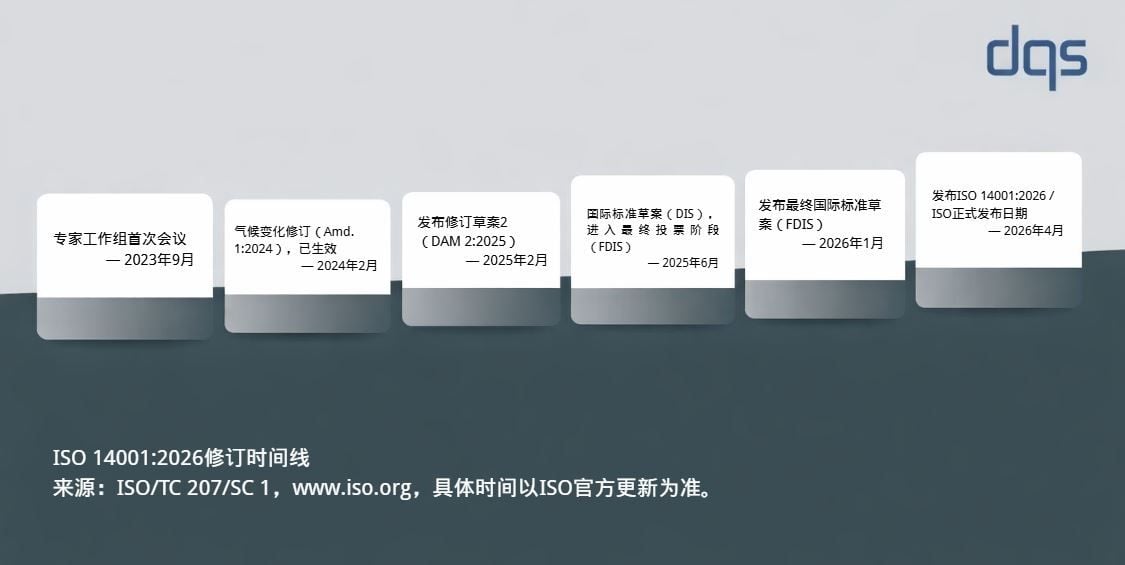
Capture30.JPG

該項目計劃旨在確保ISO 14001並以協調一致、國際共識和務實的方式進一步發展。修訂過程由負責的ISO委員會ISO/TC 207/SC 1協調。

在2029年春季之前的過渡期內,現有環境管理系統必須轉換為新標準,而這段過渡期對已認證企業尤其重要。因此,建議企業儘早審查自身的認證週期,並與DQS共同製定策略性過渡計劃,例如將其納入定期複審審核流程。

ISO管理系統標準修訂過程中包含哪些階段?

ISO管理系統標準的修訂是一個多階段、國際協調的過程,需要經過多輪草案起草、評論和協調,最終發佈為具有約束力的國際標準。由於涉及160多個成員國,需要進行正式的共識程序,翻譯成多種語言,且該標準必須適用於全球各行各業、各種規模的企業,因此整個過程耗時數年。

各個階段會發生什麼事?

工作草案(WD):委員會內部的第一個工作草案,作為粗略的指導。

  • 委員會草案(CD):第一版,在 ISO 內部進行評論和討論。
  • 國際標準草案(DIS):成熟的草案,可以首次公開徵求意見-在這裡可以廣泛參與。
  • 國際標準最終草案(FDIS):幾乎是最終版本,僅允許進行編輯變更。
  • 國際標準(IS):ISO 的官方出版品-認證依據。


哪些重要的管理體系標準仍在修訂中?

目前,主要的國際管理系統標準正在發生許多變化:例如,除了環境保護管理標準外,品質管理系統ISO 9001和職業健康安全管理系統ISO 45001也在修訂中。以下是概述:

ISO 14001修訂摘要

預計於2026年4月發布的ISO 14001修訂版,標誌著在環境管理領域中邁出了目標明確但謹慎的一步,旨在實現更具策略性的管理。此次修訂並非著眼於根本性的創新,而是著重於澄清現有內容和擴展應用說明——這完全符合用戶的意願。根據2021年用戶調查報告,用戶希望獲得更多支持,但不希望增加複雜性。

即使沒有推出任何影響深遠的新要求, ISO 14001 更新這提供了一個寶貴的機會:公司可以調整其環境管理體系未來將面臨諸多挑戰。 ISO 14001這將繼續成為環境責任、永續發展和支持全球氣候目標的穩定基礎。從長遠來看,這不僅有助於改善環境績效但同時也有助於提高競爭力。

利用2029年之前的過渡期,分析即將發生的變化,為下一次認證做好準備,並審查現有架構。標準最終發布後的三年過渡期為此提供了充足的時間。

您也可以閱讀我們的部落格文章ISO 14001:2026-安全過渡


關於 ISO 14001 修訂版的問答

ISO 14001:2026 is the fourth revised edition of the international standard for environmental management systems. It clarifies existing requirements and further reflects current developments such as climate change, greenhouse gas emissions, resource scarcity and the circular economy within environmental management.

ISO 14001 has been revised to respond to current environmental developments such as climate change, increasing requirements for climate protection, resource scarcity and the circular economy, as well as to clarify the standard technically and facilitate its application.

ISO 14001:2026 was published on 15 April 2026.

The final version of ISO 14001:2026 is available from national standards bodies, for example: 

The most significant changes in ISO 14001:2026 primarily relate to the clarification of existing requirements and a stronger emphasis on the context of the organization, particularly with regard to environmental conditions and their interrelationships. In addition, the linkage between environmental aspects, compliance obligations, and risks and opportunities is more clearly articulated – without fundamentally changing the structure of the standard.

No entirely new fundamental requirements have been introduced in the new version. Instead, existing requirements have been refined and supplemented with stronger references to climate risks, greenhouse gas emissions, biodiversity, the circular economy, as well as an enhanced life cycle perspective and consideration of influence.

questions-answers-dqs-question mark on wooden dice on table
Loading...

您對 ISO 14001 修訂版有任何疑問嗎?

我們隨時為您服務!

變革發生之處,往往會產生問題。

我們期待與您共同澄清這些問題。如有需要,我們很樂意提供更多信息,特別是關於轉讓審計或矩陣認證等主題。

了解更多。無需承擔任何義務,完全免費。

信任和專業知識

我們的文本和宣傳冊均由我們的標準專家或資深審核員撰寫。如果您對文字內容或我們為作者提供的服務有任何疑問,請發送電子郵件給我們: [email protected]

註:為方便閱讀,我們使用男性代名詞。但該指令通常涵蓋所有性別認同的人士,只要這符合聲明的需要。