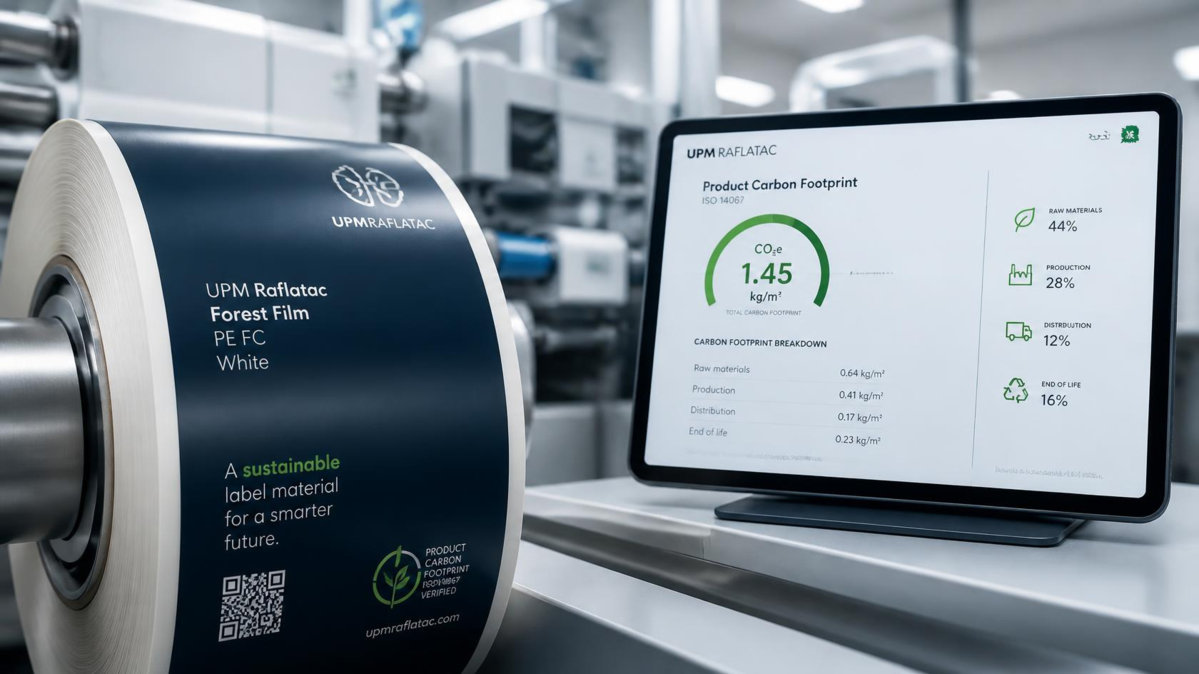
A comparative Product Carbon Footprint (PCF) study across a range of self-adhesive label materials, verified to ISO 14067, supported Fedrigoni—a market leader in self-adhesive label material—in responding to growing ESG data requests from downstream brand owners and converters, while delivering credible, standardized carbon data that strengthens Fedrigoni's position as a sustainability-led supplier in a competitive market.
Loading...
Comparative Product Carbon Footprint Project Helps Fedrigoni Meet Client ESG Demands

Loading...
Fedrigoni (Anhui) Self Adhesives Material Co. is part of the Fedrigoni Group's Self-Adhesives division, a market leader in special papers and self-adhesive label materials used across packaging, labeling, and branding applications worldwide. As part of its broader sustainability strategy, the Fedrigoni Group has committed to ambitious 2030 targets covering recyclability, responsible sourcing, and reduced environmental impact across its self-adhesive product portfolio.
As global brand owners and converters intensify their own ESG reporting and supply chain decarbonization efforts, they increasingly require upstream material suppliers — like Fedrigoni — to provide verified, comparable data on the carbon footprint of the materials they supply.
The Challenge
Self-adhesive label materials are structurally complex products, typically composed of multiple layers — face material, adhesive, and release liner — each with distinct raw materials, production processes, and supply chains. This complexity made an accurate, comparable carbon footprint assessment genuinely challenging:
- Multi-layer product complexity: Each material layer required separate lifecycle data collection and emissions calculation before results could be consolidated at the product level
- Comparability across product variants: Clients wanted to compare the carbon performance of different material constructions on a like-for-like basis, requiring a consistent functional unit and methodology across all variants studied
- Data quality and traceability: Sourcing accurate primary activity data from multiple raw material and production stages, rather than relying solely on generic secondary data
- Methodological rigor: Ensuring the study met the quantification and reporting requirements of ISO 14067 so that results would be credible and defensible when shared with demanding downstream customers
- Client-facing usability: Translating technical carbon footprint results into a format clients could use directly in their own ESG and supply chain disclosures
The DQS Solution
DQS worked with Fedrigoni's technical and sustainability teams to design and verify a comparative PCF study built for both technical accuracy and practical business use.
- Scope and Boundary Definition
DQS auditors worked with Fedrigoni to define a clear, consistent system boundary and functional unit across the range of self-adhesive materials under study, ensuring results would be genuinely comparable rather than assessed under inconsistent assumptions.
- Life Cycle Data Collection Review
DQS reviewed the primary and secondary data collected across each material layer — face stock, adhesive, and liner — verifying that activity data and emission factors were appropriately sourced and applied in line with ISO 14067 requirements.
- GHG Calculation Verification
DQS auditors verified the greenhouse gas emissions calculations underpinning each product's carbon footprint, checking calculation methodology, data quality, and the treatment of allocation and cut-off rules across the multi-layer product structure.
- Comparative Results Assurance
Because the study was designed to compare multiple product variants, DQS placed particular focus on ensuring consistent methodology was applied across all variants, so that differences in reported carbon footprint reflected genuine material and process differences rather than methodological inconsistency.
- Verification Statement and Reporting
Following successful verification, DQS issued a verification statement confirming the PCF study's conformance with ISO 14067, giving Fedrigoni credible, third-party-assured data ready to share with its clients.
The Results
The verified comparative PCF study gave Fedrigoni a clear, defensible carbon data set that could be used directly in client-facing ESG conversations.
- Client ESG readiness: Fedrigoni was equipped to respond to downstream brand owners' and converters' growing requests for verified product-level carbon data
- Competitive differentiation: As a market leader in self-adhesive label material, credible carbon footprint data reinforced Fedrigoni's sustainability positioning in a market where environmental credentials increasingly influence procurement decisions
- Informed product development: The comparative results gave Fedrigoni's technical teams a clearer picture of where carbon impact is concentrated across different material constructions, supporting future material innovation
- Scalable methodology: The verified approach established a repeatable framework Fedrigoni can apply as it expands PCF assessment across further product lines
Why DQS for ISO 14067 Verification
DQS supports manufacturers across the packaging, materials, and industrial value chain in quantifying and verifying product carbon footprints to ISO 14067. Our auditors bring both deep technical understanding of lifecycle assessment methodology and practical experience with multi-layer, multi-material products — helping clients turn carbon data into a genuine commercial advantage.
Contact DQS
Need to verify the carbon footprint of your products to meet client ESG requirements?
Author
DQS Hong Kong
DQS – Leveraging Quality, Driving Success.
DQS empowers organizations worldwide to build trust, drive innovation, and achieve sustainable growth by certifying the future of business. Founded in 1985, DQS has grown into a global leader in the assessment and certification of management systems, with a team of 3,000 highly qualified auditors delivering over 130,000 audit days per year in more than 60 countries. Through internationally recognized certifications across 200+ standards, DQS helps businesses manage risks, ensure compliance, and unlock new opportunities in an evolving regulatory and business landscape.
Thinking beyond compliance, DQS is a trusted partner for digitalization, automation, and sustainability leadership. The company’s expertise covers a wide range of areas, spanning from cybersecurity and AI governance to ESG compliance, supply chain management, medical device safety, and future mobility, delivering real value to industries in their pursuit of resilient, sustainable, and intelligent systems. By leveraging advanced auditing methodologies, predictive analytics, and real-time insights, DQS supports organizations to future-proof their operations while demonstrating their commitment to excellence and responsible business practices.

Loading...