Today, management systems provide far more than just the organizational framework for processes and responsibilities. They provide orientation, strengthen the reliability of organizational processes and support the strategic management of a company. As a structural basis, they make a significant contribution to making objectives transparent, controlling risks and anchoring continuous improvement. This makes them a key success factor for effective corporate management, regardless of individual management styles. In this article, an experienced DQS auditor will tell you which factors strengthen a management system and what really matters in day-to-day work.

Loading...
Success factor management system

Loading...
Management systems - a decisive success factor in leadership
To what extent are management systems actually used today for corporate development, and not just to achieve certification? You might ask yourself this question when you look into some companies as an external auditor.
When used correctly, management systems are far more than a compulsory exercise. Especially in times like these, they form a stable foundation for robust processes and clear, strategic corporate development. The current challenges, from regulatory requirements and geopolitical and technological changes to sustainability goals, demand decisive action and a clear focus from companies. True to the guiding principle: management with a system, and at the same time a system for management.
Where do management systems stand today?
- Process- and risk-oriented approach widely established
- Integration of technology to increase efficiency
- Increased employee involvement and flatter hierarchies
Where are they heading in the future?
- Further development of the process and risk-oriented approach
- Deeper technological integration to further increase efficiency
- Increased employee involvement and flatter hierarchies
- AI-supported decision-making and automated process optimization
- Complete digital integration of all areas of the company
- Focus on complexity and regulation, sustainability and continuous innovation
The current standard revisions, such as the ISO 9001 revision or the ISO 14001 revision, also address modern developments in a contemporary way. These include dealing with opportunities and changes, the use of new technological possibilities and topics such as corporate culture and ethics. All of this is reflected in ISO's "Emerging Trends".
Barriers to success in management systems
Why they arise
All ISO standards for management systems are designed to create clear and uniform corporate structures, and they are not an end in themselves. However, a look at the practice shows that there are still widespread misunderstandings:
- The certificate, and behind it the certifiers and accreditors, are at the forefront of all efforts. The management system becomes a compulsory exercise. A system that is not used is, in fact, pure waste.
- The management approach is not understood as a management tool. All too often, strategy development and target planning run in parallel "on the side". Management reviews and internal audits offer ideal opportunities to reflect on and further develop strategic issues.
- Chapters of standards are often only "ticked off" one after the other. The requirements of a standard are cleverly interlinked. However, a manual that is structured along individual chapters is of no use. Even a management assessment that merely copies the standards agenda does not usually provide an attractive structure for any managing director. It is therefore important to find the right measure and a company-specific implementation.
- The "scope" of a management system does not end with the management representative and his activities, but always encompasses the entire company.
- External auditors tell you "where to go". Some people think so, but different interpretations of the standards are normal. The following applies to everyone involved: standards describe requirements, meaning what must be fulfilled, but not how. So the question is: where exactly is what described?
Loading...
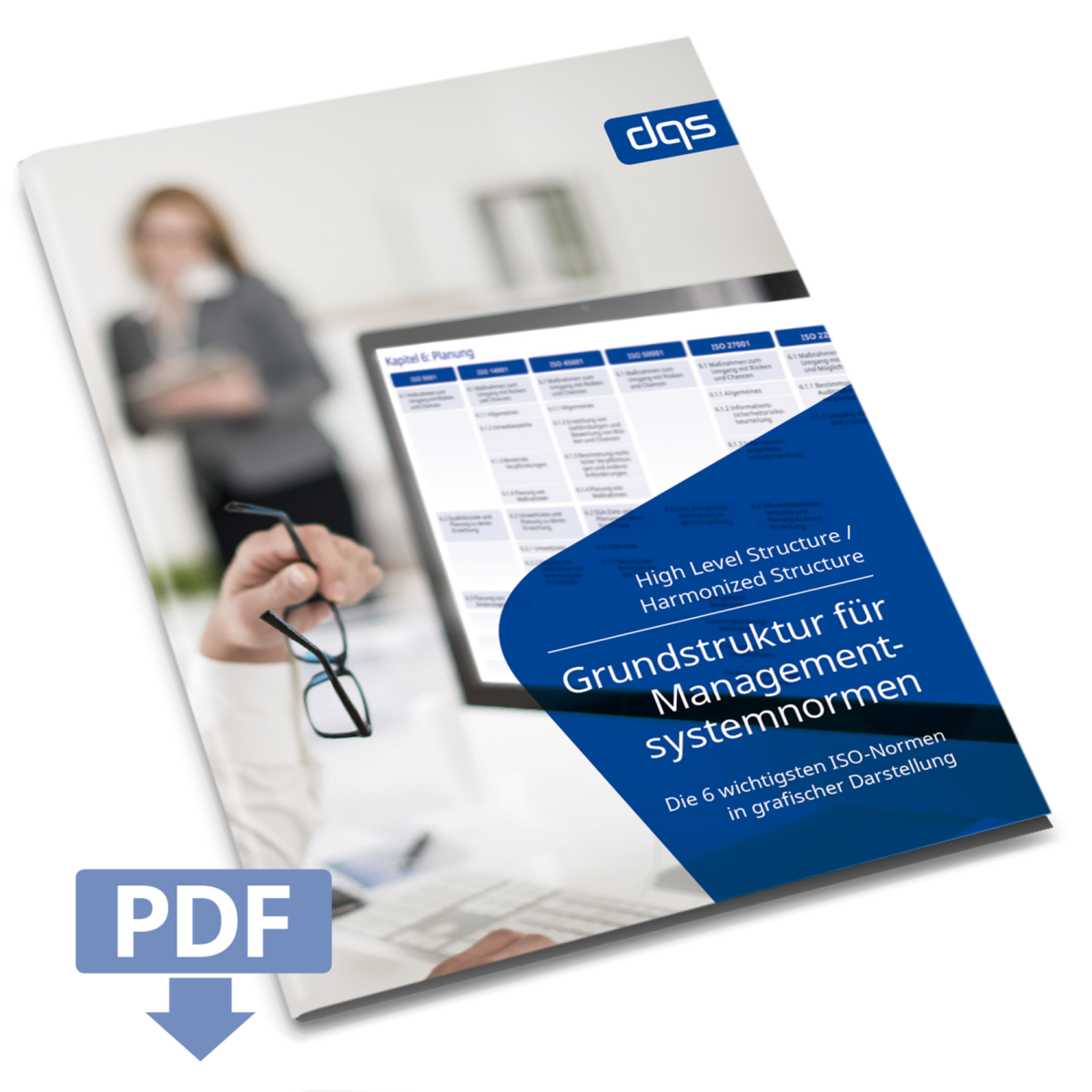
Free white paper
Basic structure of modern management systems
6 ISO standards in graphic form
With the introduction of the basic structure for management system standards (HLS/HS), the implementation of several management systems in a company has become much simpler and more efficient. Our free white paper graphically illustrates the 6 most important standards.
- ISO 9001, ISO 14001, ISO 27001, ISO 45001, ISO 50001 and ISO 22301
- Place systems next to each other and compare
- Recognize synergies for an integrated management system
Can't you do without a management system? Sure, you can. But the consequences can be serious:
- Loss of structure, declining efficiency and increasing error rates. This leads to rework, delays and ultimately to economic losses. Employees spend more time searching for information or clarifying responsibilities - to the detriment of productivity.
- A lack of standardization jeopardizes the company's image and weakens its market position in the long term.
- Unclear processes and a lack of transparency frustrate employees and increase the risk of staff turnover, a cost and competitive factor that companies can ill afford.
- Paradoxically, the lack of a formal system often leads to companies developing inefficient manual processes to create order, which leads to even more bureaucracy.
The question should therefore not be whether to "hire" a management system. Rather, it is worth asking whether the existing system should be raised to a new level of performance and developed further in a targeted manner.
12 key success factors
These twelve success factors for interactive management systems show how you can effectively develop your system and make it fit for the future:
1. Strengthen leadership:
As a board member or management representative, it is your responsibility to view management systems not as a mere formality or control instrument, but as the strategic foundation of your company. In this way, you create stability, innovative strength and future viability.
What can you do as “top management”? Act as a role model: show initiative, drive implementation forward and motivate your teams to get involved. Only together can a management system become a real success factor and make a company fit for the future.
2. Sharpen the strategic focus:
The context of the organization and interested parties are often only available as “lists” for external auditors. But what is really done with them? Are these topics embedded in the PDCA cycle and strategy development? For example, link “strategy days” with the management review and use internal audits to objectively reflect on strategic issues.
3. Live process orientation:
Create end-to-end processes that enable smooth internal and external collaboration. A process, for example for personnel development, does not end in the rooms of the HR department, but involves all parties equally: management, managers and employees in the departments, but also employee representatives, etc. Think holistically.
4. Communication at process interfaces:
Processes can be well described, and yet errors, rework or misunderstandings arise between those involved in the process. The key lies in good, transparent communication and the question: What does the upstream and downstream process need? This transparency also promotes a positive working atmosphere.
5. Make targeted use of technological support:
Modern tools, AI and, in perspective, quantum computing must be actively integrated into processes in order to increase efficiency and innovative strength. AI-supported applications offer enormous potential and can be managed and further developed in a structured manner within the organizational framework.
6. “Streamline” documentation:
Documented information “grows” over years, often without adding value. Less is sometimes more. Documentation should support, not burden, and help employees to perform their tasks competently. Modern forms, such as audio and video recordings, are also a possible standard-compliant form of documented information.
7. Actively involve employees:
Loyalty and commitment are key resources. Promote an open error culture and involve all levels. True to the motto: it is not important “who” is to blame, but “what” is the cause. Employees often have the best ideas, so create “open doors”.
8. Use internal audits as a management tool:
Internal audits are more than just checks. They reveal opportunities, risks and potential for improvement. Interdisciplinary audit teams are on the rise. Continue to expand the number of your internal auditors and ensure better coverage of skills.
Loading...
Free white paper
Integrated risk and opportunity management
Download the "Risk 2.0" research project
Only integrated risk and opportunity management offers a reliable way of successfully positioning yourself in an anti-fragile manner. This means rethinking risks and opportunities and how to deal with them. This realization is also slowly gaining acceptance in standardization. Accordingly, the introduction of opportunity-based thinking is part of the current revision agenda for ISO 9000 and ISO 9001. The "Risk 2.0" research project sponsored by DQS provides exclusive results for you.
9. “Real” management reviews:
All too often, management reviews are only used to comply with standards. Instead, use them as a central management tool, for looking back as well as for the future of your company. The standard requirements form the central theme, but it is crucial to turn them into an assessment that is really valuable for the company.
Our tip: In the management review, not only describe the results of the last audits, but also set the audit priorities for the coming year together with the managers. In this way, audits once again contribute to the further development of your company.
10. Integrate the customer perspective:
Actively integrate your customers’ perspective into process design in order to sustainably increase customer satisfaction. How about inviting customers directly to workshops on improvement and idea management? Incidentally, the involvement of “internal customers” is equally interesting.
11. Continuous improvement:
The three letters “CIP” continue to describe the engine for continuous improvement. Question routines, promote the exchange of information about mistakes and use the findings to further develop your organization. Make the benefits of an effective management approach visible to everyone: fewer errors, optimized processes, more efficient workflows, greater innovative strength and stronger competitiveness. Visibility creates acceptance and the willingness to actively participate.
12. Make successes visible:
Celebrate successfully implemented measures together and make results transparent. Are there any success stories from internal audits? What positive effects were achieved through internal audits last year? What contributed to the success? What risks could be avoided? Is management positive about this? Which department has implemented improvements particularly well? This is “QM marketing” in the best sense of the word.
Conclusion - management system as a success factor
Modern management systems are far more than just proof of conformity to standards. They are a strategic tool that creates orientation, stability and sustainability. However, many companies do not yet fully utilize this potential, either out of habit or because their actual benefits are underestimated.
As a management representative or top management, it is up to you to actively use your system, provide resources in a targeted manner, involve employees and further develop the system as a strategic management tool. The twelve success factors show how an effective management system makes a decisive contribution to sustainable corporate success. It creates stability, strengthens innovative power and offers a resilient foundation for growth, further development and resilience, especially in challenging times.

Loading...
Do you have any questions?
We are here for you.
Find out more - without obligation and free of charge.
DQS - your specialist for audits
DQS Deutsche Gesellschaft zur Zertifizierung von Managementsystemen was founded in 1985 as Germany's first management system certifier. We have always been the only large certification company to focus on management systems and processes. In 1986, for example, we issued Germany's first certificate in accordance with ISO 9001, the world's most important standard for management systems.
With our certification audits, we pursue the goal of showing our customers strengths and impulses for improvement potential - beyond the mere conformity assessment. To this end, we employ freelance, highly qualified specialists and managers with relevant industry knowledge as auditors. Our claim begins where audit checklists end. Take us at our word. We look forward to getting in touch with you.
Trust and expertise
Our texts and brochures are written exclusively by our standards experts or long-standing auditors. If you have any questions about the text content or our services to our author, we look forward to hearing from you. contact with you.
Note: For reasons of better readability, we use the generic masculine. However, the directive includes persons of all gender identities where necessary for the statement.
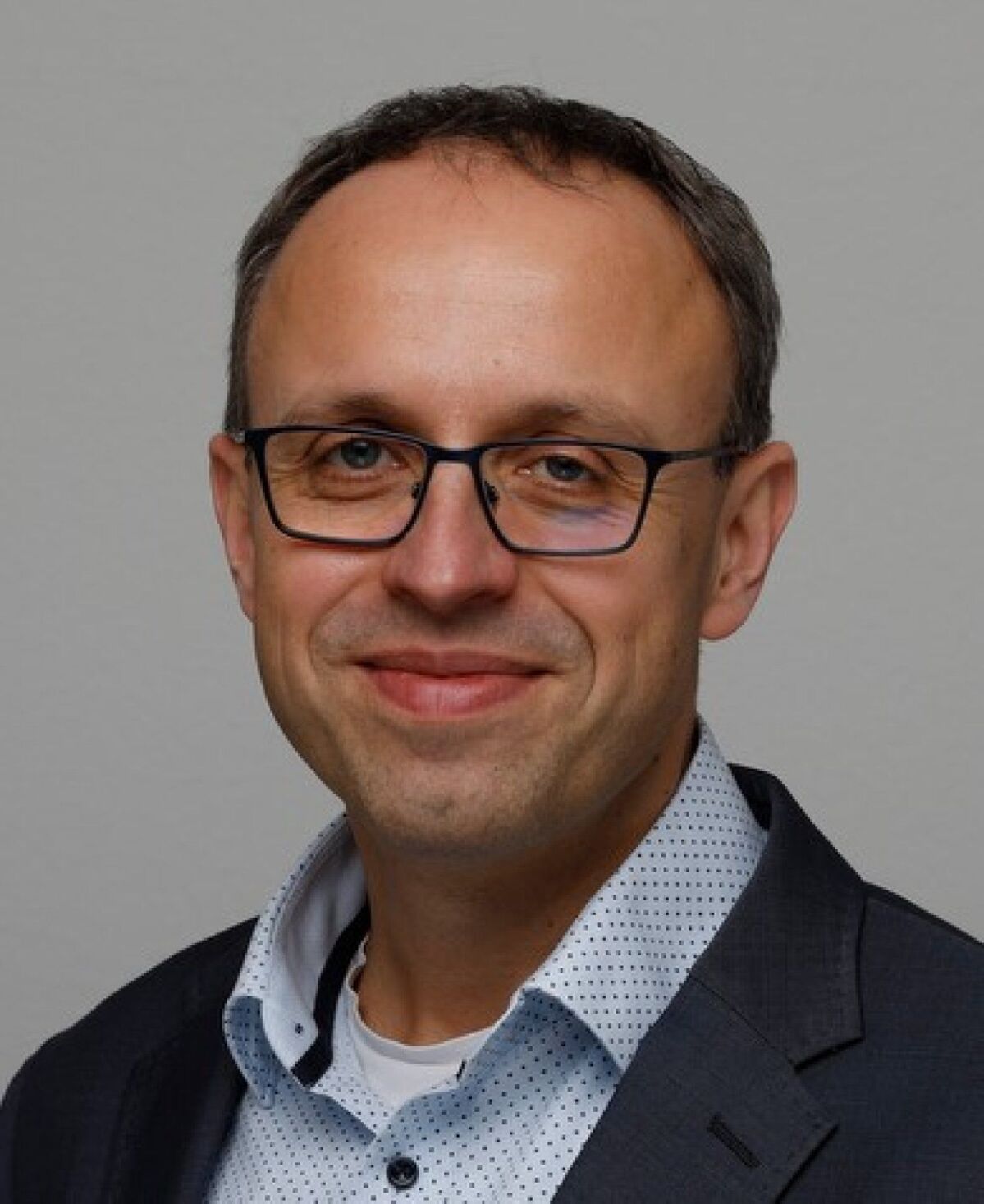
Author
Christian Ziebe
DQS Auditor and Expert for Service Excellence and ISO 9001 with extensive experience in the financial services sector, including project and complaint management, EFQM assessor.
Loading...