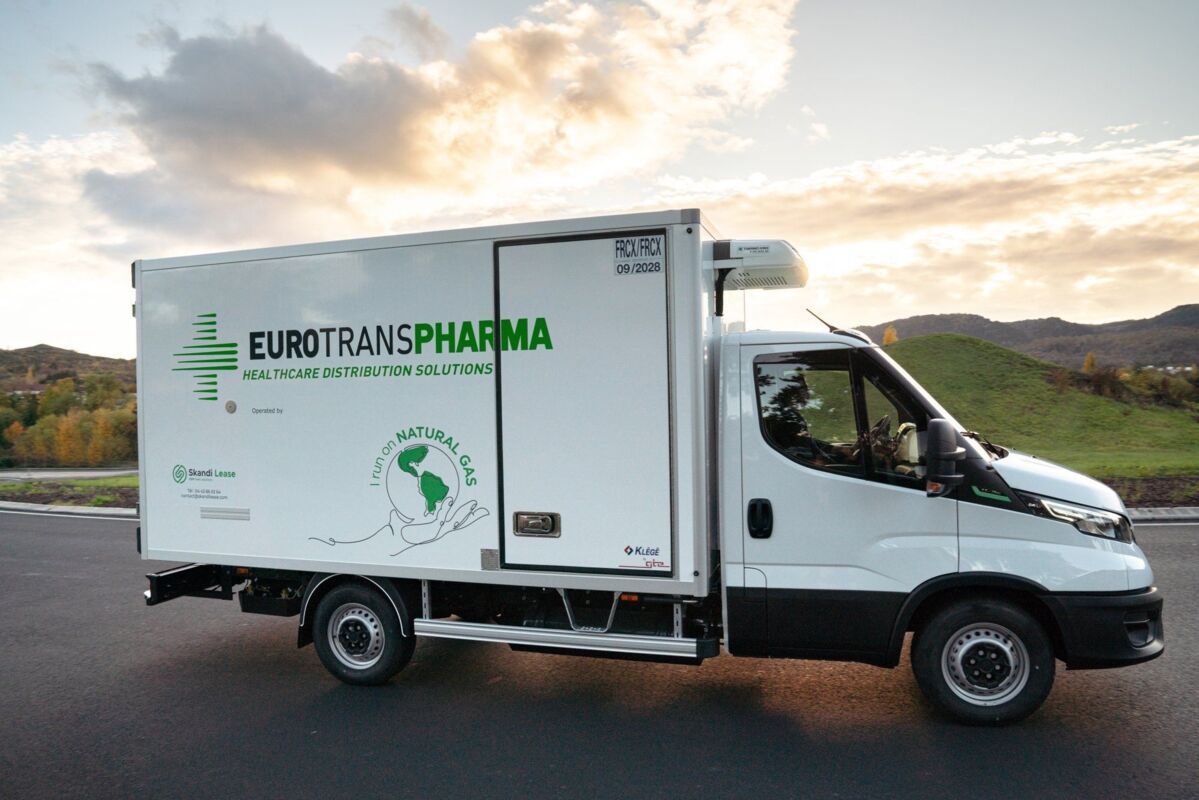
DQS: The German branch of Eurotranspharma (ETP) was only founded in September 2023 - how did you manage to implement the requirements of ISO 9001 and the GDP guidelines ready for certification in such a short time?
Andrea Blum: I can name two key pillars here: When setting up ETP Germany, we were able to rely on a team with pharmaceutical experience in the management functions - just for fun, we added it up and came up with more than 200 years of experience. We have also been active in other countries for quite a long time and have had the above-mentioned certifications there for years. Our colleagues have actively supported us - especially in the first few months.
ETP Germany is primarily active on the so-called "last mile" - certification in accordance with both GDP and ISO 9001 is not actually mandatory. Do you see the certifications as a competitive advantage in a highly competitive environment?
Steffen Segelke: Above all, pharmaceutical distribution has something to do with trust. Can I entrust my goods to a partner who can only help the patient if they are in perfect condition? Many of the people involved are well-known in the pharmaceutical market, yet ETP was a new company in Germany. The certifications are of course an important element in building trust.
So the certifications are primarily based on a strategic decision?
Steffen Segelke: Strategically, yes, but from two perspectives: on the one hand towards the customer as a basis, and on the other hand internally - especially to ensure that the processes really interlock in a company that is being built up and that we are constantly reviewing ourselves.
Which GDP requirement required the most effort?
Andrea Blum: There is no such thing as "one big requirement". The challenge was rather the simultaneity of the projects, namely the establishment of an operational network - infrastructure, personnel, equipment, all of this, the establishment and implementation of the GDP and "ISO 9001" compliant quality management system, here above all processes, training, self-inspection, qualification and finally the attainment of certification maturity. The usual approach is to take these steps in succession. We could not have achieved this without our dedicated team and a common goal.
At ETP, in addition to the continuous improvement process from ISO 9001, you also have your own optimization system for your processes, called CAPA - can you give us an example to explain the difference to the well-known and proven PDCA cycle?
Andrea Blum: I think that the methods of ISO 9001 and GDP complement rather than differ from each other. CAPA focuses on identifying, investigating and eliminating deviations and thus contributes to continuous improvement. Our basic procedure follows the PDCA cycle.
What specific benefits did ISO 9001 have for you in terms of implementing the GDP guidelines?
Andrea Blum: ISO 9001 forms the basis, the structure of our quality management system and provides us with (process) orientation, if you like. Due to the similarities between the two standards, we were able to supplement the special requirements of the pharmaceutical industry for the transportation of medicines. We have thus created the conditions for establishing stable processes, continuously improving them and ensuring the quality and integrity of pharmaceutical products. The combination of ISO 9001 and GDP contributes directly to our values. We focus on our customers, quality, integrity and innovation. And particularly important: our employees.
It is well known that non-accredited parties also offer their services in the area of ISO 9001 certification - what do you think of this?
Steffen Segelke: You mention the supposedly "easier way", but that was never an option for us. As I said earlier, we also commission certification for our internal processes - not just as a pure marketing tool. And in the pharmaceutical sector in particular, many customers not only rely on the certificate, but also regularly carry out their own audits. It would be fatal if we failed these audits because we had previously opted for the "easier way". We have found DQS to be a real sparring partner, whose expertise helps us to become even better.
Fortunately, you opted for an accredited certifier - how did you come across DQS?
Andrea Blum: The criteria for selecting a certifier were competence and reliability. As a leading certification company, DQS was naturally on our list.
Steffen Segelke: As a company in the process of being set up, the choice of partner for certification is particularly important. For me, it's comparable to a structural engineer checking the construction. You need a partner with expertise and a standing of their own, who will also ask critical questions. We associated these attributes with DQS in advance and made our decision accordingly.
How did you find the specific work of our audit team, Andreas Völkerding and Martin Campe?
Andrea Blum: The entire Eurotranspharma team worked for months towards the initial certification. Of course, we were all a bit tense and nervous. However, the DQS audit team managed to convey a positive feeling to the employees. In addition to their expertise in the standards, the auditors also had the necessary logistics experience. The auditors scrutinized our processes with technical know-how and professional skill, and it was also confirmed that certification by DQS is not the "easy way" mentioned earlier.
Would you describe the DQS audits as value-adding for ETP, and if so, can you give us a small example?
Andrea Blum: The audits were of course carried out to verify compliance with the requirements of ISO 9001 and GDP. The fact that the auditors focused on the individuality of our company, our goals and our potential for further development beyond compliance with standards was very beneficial for us. Constructive discussions opened our eyes to other perspectives and approaches. One example is the implementation of internal audits: not to carry out the traditional department or specialist area audit, but to continue the process-oriented approach and look at the functionality of the processes and the interaction of the specialist areas across departments. Process improvements can thus be initiated holistically.
Would you recommend DQS as a certification company?
Andrea Blum: A clear YES! We have come to know and appreciate DQS and its auditors as a competent and trustworthy partner.
That makes us very happy! Ms. Blum, Mr. Segelke, thank you very much for the interesting interview!