The ISO 50001 energy management standard requires organizations to systematically and continuously record, analyze, and optimize their energy use and consumption. The focus is on the systematic improvement of energy-related performance, resulting in more efficient use of energy, thereby reducing energy costs and negative environmental impacts. Energy Performance Indicators (EPIs) play a key role in this process, enabling companies to demonstrate improvements in energy efficiency compared to the energy baseline. Read the following article to find out exactly what the international standard requires to improve energy efficiency.
Loading...
Improving energy efficiency - what does ISO 50001 require?

Loading...
What does energy efficiency mean?
According to the popular ISO 50001 standard for an energy management system, the definition of energy efficiency is as follows:
Energy efficiency is the "ratio or other quantitative relationship between an output of performance, service, goods, commodities, or energy, and an input of energy"
Source: ISO 50001:2018, Clause 3.5.3
For physical reasons, the value of this relationship, which can be represented as a quotient, is always < 1. The numerator (output achieved) and denominator (energy used) of the quotient are clearly defined and measurable. The smaller the value, the worse the efficiency.
Energy efficiency refers to processes and measures aimed at minimizing the energy consumption of devices, systems or processes. This involves not only reducing energy consumption, but also minimizing energy losses and optimizing usage.
If you want to approach the topic of "improving energy efficiency" from the perspective of the standard, you have to look at the measurable results of energy efficiency: measuring the performance achieved and the energy used to achieve it.
Energy efficiency in an organization
If you look in the ISO standard for a specific requirement to improve energy efficiency, you will not find one. However, such a requirement can be found indirectly in the definition of improving energy-related performance*.
* "Improvement of the measurable results of energy efficiency or energy consumption in relation to energy input, compared to the energy baseline"
According to Clause 10.2 "Continuous improvement", the standard requires the organization to demonstrate continuous improvement in energy-related performance - and thus also energy efficiency, as it is an integral part of energy-related performance. This can be achieved, for example, through the use of energy-efficient technologies, the optimization of processes or by training and sensitizing employees to the conscious use of energy.
The results are measured using energy performance indicators. They are a "measure or unit of energy-related performance as defined by the organization", which can be expressed as a pure number, a ratio or a model. Their value relates to a specific point in time or a specific period.
Standard requirements for the measurement of key figures
The requirements for measuring the relevant key figures can be found in Clause 6 of ISO 50001.
Clause 6.2 sets out requirements for a company's energy targets. In our context, it is particularly important that these targets must be measurable and that the locations with significant energy use ( SEU) are taken into account. Energy use is the standard term for the "application of energy". This refers to the end use of energy for appliances, machines, heat and light generation, IT applications or transportation, for example.
Clause 6.3 contains the requirements for developing and carrying out an energy assessment. This requires the analysis of current and past energy use and energy consumption on the basis of measurements and other data, which in turn forms the basis for determining the SEU. The relevant variables and current energy-related performance must be determined at these locations, which are essential for improving the measurable results of energy efficiency.
This also applies to those people who can influence the main consumption. In addition, future energy use and energy consumption must be estimated.
Clause 6.4 requires the determination of energy performance indicators (EnPI) that are suitable for measuring and monitoring the company's energy-related performance and for demonstrating the improvement of energy-related performance. The values determined must be compared with those from the energy baseline.
Clause 6.5 requires the establishment of an energy baseline (EnB) based on the energy assessment. The energy baseline is defined as "quantitative reference point(s) as a basis for a comparison of energy-related performance". It must be ensured that the period selected is representative of the business activity.
For variables that have a significant impact on energy-related performance, a so-called normalization must be carried out between the EnB values and the current EnPI values under certain circumstances. This is the adjustment of data in order to compare past and current energy-related performance.
Clause 6.6 focuses on planning for the collection (measurement) of data and the appropriate implementation of the planning. The focus here is on determining the data required for monitoring the main characteristics and how often and in what way the data to be retained (documented information) must be collected.
Loading...
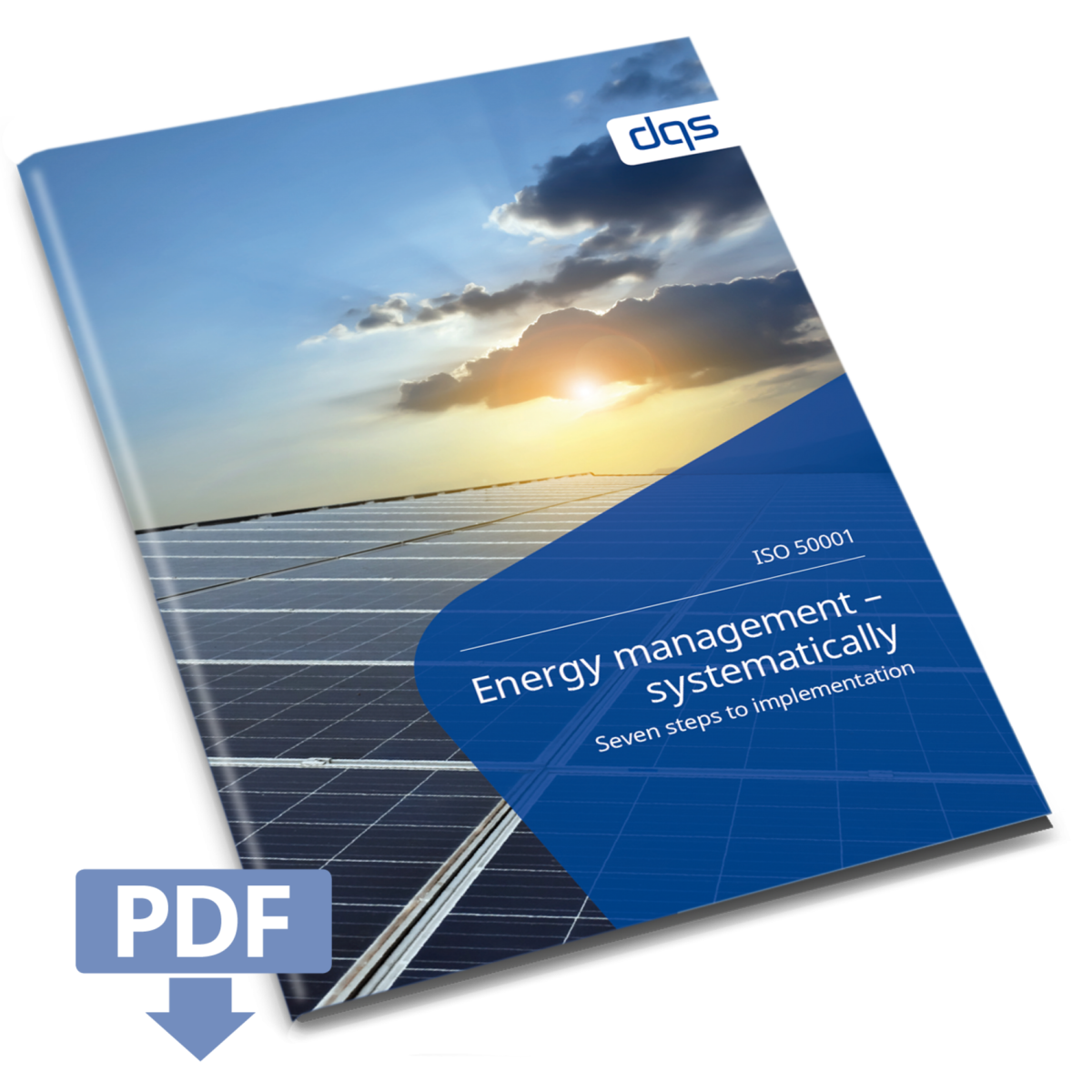
ISO 50001 Energy management - systematically
Learn more about systematic energy management in our free White Paper and benefit from the know-how of our experts.
- What you need to know about ISO 50001
- Seven steps for the implementation of an energy management system
- Details about the ISO 5000x family of standards
Implementation of energy efficiency measures
The data and measured values collected at locations with significant energy use are the basis for evaluating energy efficiency. In order to improve the measurable results, appropriate efficiency measures must now be developed and implemented. The requirements for the implementation of such measures are set out in Clause 8. However, it is up to the company itself to decide which organizational and technical measures it takes to systematically increase energy efficiency.
Investments in the company must make economic sense.
In addition to the optimization of processes and more efficient use of energy in daily operations, the procurement of new and replacement of energy-consuming devices, machines and other components is of central importance. However, such an energy-related investment should also make sense from a financial perspective. It is therefore advisable to use a recognized method when evaluating economic efficiency.
EN 17463 (VALERI)
In Europe, EN 17463 (VALERI), guidelines for the evaluation of energy-related investments, provides comprehensive useful guidance on the economic feasibility of energy-related investments.
A number of European companies are obliged to prove the economic viability of such investments by means of an accredited audit in accordance with EN 17463:2021. However, the European standard can also provide smaller companies with an incentive or serve as a practical guide to review and improve their investment assessments, regardless of legal obligations.
ISO 50005 - Energy efficiency in SMEs
The ISO 50005 standard, which applies specifically to small and medium-sized enterprises, also defines improved energy-related performance as an improvement in energy efficiency or energy consumption in relation to energy use. However, reference is always made to the overarching energy-related performance, for example when measuring EnPI.
The standard, which is designed as a maturity model, therefore does not set any specific requirements for increasing energy efficiency in the sense of a measurable improvement in energy efficiency results, but rather makes general statements on energy efficiency in the four stages of its maturity model.
Understanding other standards for energy efficiency
In addition to the standards mentioned, there are numerous other standards and statutory regulations that have been established to reduce energy consumption and environmental impact. They set minimum requirements for the energy efficiency of products and services and are therefore an important part of the strategy to combat climate change.
Understanding these standards and guidelines is crucial for businesses and consumers to make informed decisions about the purchase and use of products and services that affect their energy consumption and environmental impact. Without norms and standards, it would be difficult to measure and track progress in energy efficiency. They are therefore an indispensable tool for achieving the global Sustainable Development Goals.

Loading...
Managing energy efficiently with ISO 50001
Saving energy and costs go hand in hand - at least if you have an ISO 50001-certified energy management system. Find out more free of charge and without obligation.
Improving energy efficiency - Conclusion
An energy management system in accordance with ISO 50001 supports companies in systematically identifying potential energy savings, reducing costs and anchoring energy efficiency in the company in the long term. However, the requirements for improving energy efficiency are rather hidden in the ISO standard. The user must make the mental leap to the requirements for improving energy-related performance in Clause 10.2, which is an indispensable part of the continuous improvement process.
Energy efficiency management plays a central role here and makes a significant contribution to reducing the environmental impact and increasing energy efficiency in the economy. This can be achieved through both technical and organizational measures that determine more efficient energy use in work processes. Environmentally conscious employee behavior also has a noticeable impact on energy consumption, which should be supported by training and awareness-raising.
DQS - you can rely on us
DQS is the oldest and most experienced service provider for the assessment and certification of management systems and processes in Germany. Take advantage of our worldwide reputation for your success. We issue internationally recognized certificates on the basis of accredited procedures. On almost 100 days a year in Germany alone, we undergo inspections and witness audits by the German Accreditation Body (DAkkS) and other system providers.
Our industry-experienced auditors always audit impartially, independently and appropriately. Our claim begins where audit checklists end. Take us at our word.
Trust and expertise
Our texts and brochures are written exclusively by our standards experts or long-standing auditors. If you have any questions about the content or our services, we look forward to hearing from you.
Author
Tyrone Adu-Baffour
The environmental engineer looks back on more than ten years of experience as a project engineer for energy efficiency and energy management, as well as in the field of sustainability. In addition to his role as Head of Product Management & Accreditation, he is a DQS standards expert and auditor for the ISO 9001, ISO 14001, and ISO 50001 standards. Tyrone Adu-Baffour is also active in two German DIN standardization groups under the "Fundamentals of Environmental Protection (NAGUS)" committee.

Loading...