In today's rapidly evolving business landscape, organisations face increasing complexities and challenges. To thrive in this dynamic environment, companies must adopt effective management systems that ensure compliance, enhance operational efficiency, and drive continuous improvement. This is where an Integrated Management System (IMS) becomes an effective solution. By combining multiple management systems into a unified framework, an IMS enables organisations to streamline processes, optimise resources, and achieve holistic success. In this blog, we will explore the concept of an Integrated Management System, its benefits, and the key steps involved in successfully implementing such a system, with the expert guidance and assistance of DQS.

Navigating Success: The Journey to Implementing an Integrated Management System with DQS

Understanding Integrated Management Systems
An Integrated Management System is a comprehensive approach that integrates different management systems within an organisation into one cohesive structure. Traditionally, companies have separate systems for quality management, environmental management, occupational health and safety, information security, and other critical areas. However, managing these systems in isolation can lead to duplication of efforts, inefficiencies, and increased complexity.
By implementing an IMS, organisations can harmonise these systems, bringing them together under a common framework. This integrated approach allows for better coordination, improved risk management, and enhanced performance across the board. With an IMS, companies can effectively align their objectives, reduce duplication, and capitalise on synergies, resulting in streamlined operations and improved outcomes.
The Benefits of an Integrated Management System
Implementing an IMS offers a wide range of benefits for organisations:
- Enhanced Efficiency: By consolidating multiple management systems into one, companies can eliminate duplication of efforts, reduce administrative burden, and optimise resource allocation. This leads to improved operational efficiency and cost savings.
- Streamlined Audits and Assessments: With an IMS, organisations can avoid the need for separate audits and assessments for each individual management system. This saves time, minimises disruption to the business, and allows for a more holistic evaluation of performance.
- Improved Risk Management: An IMS facilitates a unified approach to risk management by considering various aspects simultaneously. This comprehensive view enables organisations to identify potential risks, implement proactive measures, and ensure compliance with regulations and standards.
- Enhanced Decision-Making: By integrating diverse management systems, organisations gain a comprehensive understanding of their operations. This holistic perspective enables informed decision-making based on a broader range of information, leading to improved outcomes and strategic alignment.
- Increased Stakeholder Confidence: Implementing an IMS demonstrates a company's commitment to excellence, compliance, and customer satisfaction. It enhances stakeholder confidence, strengthens relationships with customers and suppliers, and provides a competitive advantage in the market.
The Journey to Implementing an Integrated Management System with DQS
Implementing an IMS is a transformative journey that requires careful planning, effective execution, and expert guidance. DQS, as a trusted certification body and leader in integrated management systems, provides invaluable support throughout this journey.
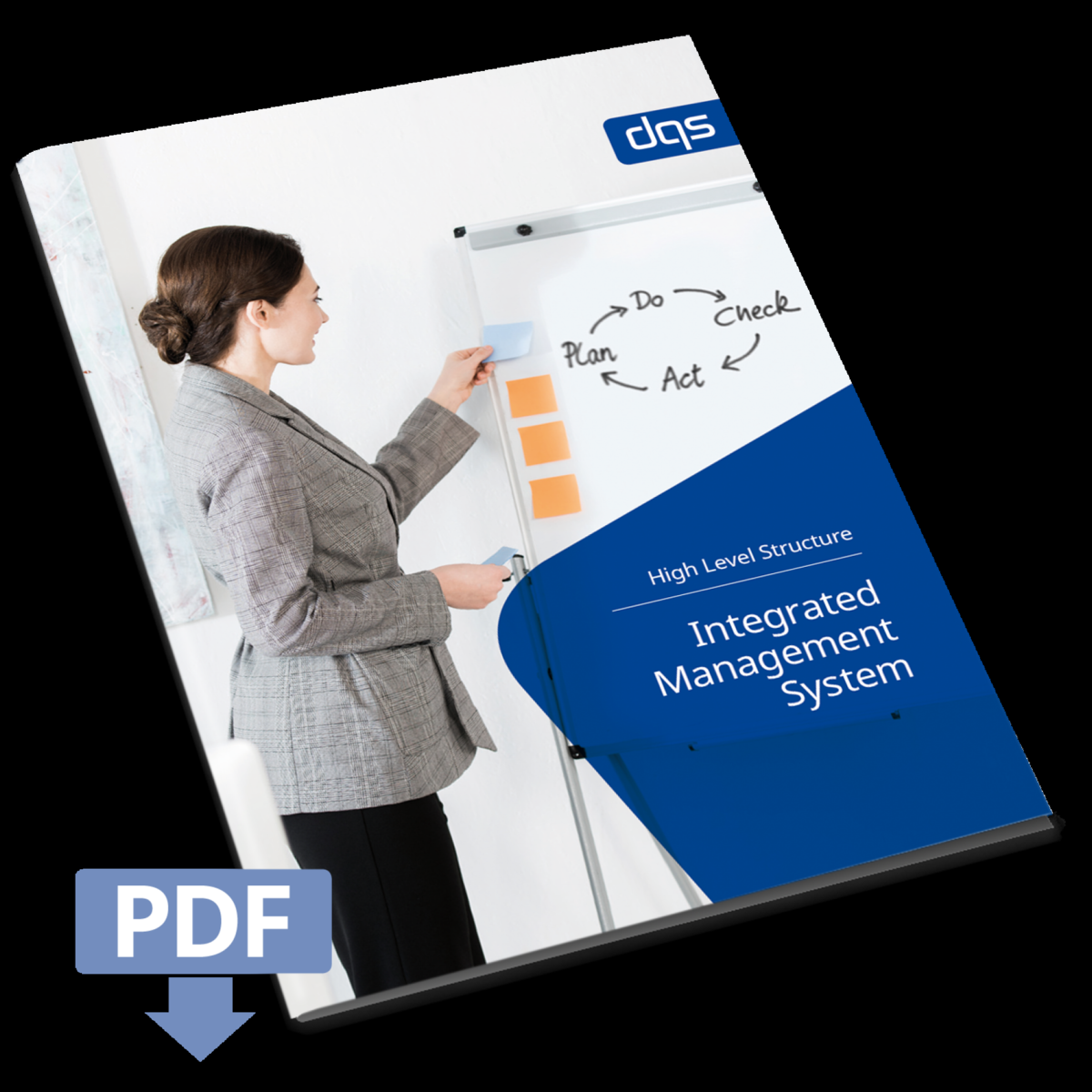
Building an Integrated Management System
With a High Level Structure (HLS)
Receive our FREE white paper "High Level Structure (HLS) - An opportunity for integrated management systems"
Let's explore the key steps involved:
- Assessment and Analysis: DQS auditors work closely with organisations to assess their existing management systems, identify areas of improvement, and determine the requirements for integration. This analysis forms the foundation for developing a tailored IMS roadmap.
- Objective Setting and Prioritisation: With DQS's guidance, organisations define their IMS objectives based on strategic goals, industry standards, and stakeholder expectations. Together, we establish priorities and develop a roadmap for implementation.
- Establishing a Solid Foundation: DQS assists organisations in building a solid foundation for their IMS. This includes standardising processes and documentation, implementing a uniform process management system, and leveraging the High-Level Structure (HLS) to ensure compatibility with different management systems.
- Implementation and Integration: DQS auditors work collaboratively with organisations to assess implementation of the IMS and the integration of various management systems. This involves establishing internal controls, conducting audits, providing training to employees, and ensuring a seamless transition.
- Continuous Improvement and Certification: DQS supports organisations in continuously monitoring and improving their IMS through regular assessments of internal audits, and management reviews. When the organisation is ready, DQS can provide readiness reviews (GAP Audits) and certification services to validate the effectiveness of the implemented IMS and demonstrate compliance with international standards.
Implementing an Integrated Management System is a strategic decision that can significantly transform an organisation's performance, efficiency, and reputation. With DQS as your trusted partner, you can navigate this journey with confidence and ensure a successful implementation. DQS brings extensive expertise, industry-leading practices, and a customer-centric approach to help you unlock the full potential of an integrated approach.
Start your journey towards navigating success today!
Visit our Integrated Management System page to learn more about how you can transform your organisation's efficiency, streamline processes, and enhance overall performance.

IMS Training through DQS Academy
Integration of management systems training that is based on the criteria of ISO 9001:2015, ISO 14001:2015 and ISO 45001:2018
Francois Labuschagne
Correctly positioned in the South African and International markets, with a proven track record in all industry, DQS assists any size organisation with its Management System Certification, Assurance, Training and Sustainability requirements.